
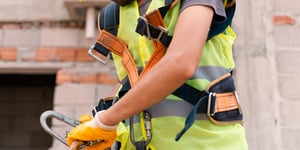
Norway is a highly regulated labor market with strong expectations around health, safety and employee welfare. Foreign companies sending employees to Norway for temporary assignments often focus first on immigration, tax or contractual matters—but Health, Safety and Environment (HSE) compliance is just as important. Even short-term projects may trigger substantial HSE obligations under Norwegian law.
Understanding posted work under Norwegian law
A posted worker is an employee who, for a limited period, performs work in a country other than the one in which they normally work. When assessing whether an employee is working in Norway for a limited period under Section 1 7 of the Working Environment Act (AML), authorities look at the overall situation. Relevant factors include whether the work in Norway is genuinely temporary, when the posting began, whether the employee is sent to a country other than their usual workplace, and whether they will return to their home country job afterwards. Authorities also consider the type of work performed, whether the employer covers travel, board and lodging, and whether the same or another worker has previously been posted to carry out the same task.
Foreign companies sending employees to Norway according to the above—even for short assignments—must comply with several core parts of the Norwegian Working Environment Act. The goal is to ensure that posted workers receive health, safety and working conditions equivalent to those of Norwegian employees.
Below is an overview of the key obligations foreign companies must be aware of when posting workers to Norway for assignments of up to 12 months; projects that extend beyond this period trigger additional duties and requirements.
Also read: Key compliance rules for employers relocating employees to Norway
NEED HELP UNDERSTANDING NORWEGIAN HSE REQUIREMENTS?
We know what it takes for foreign companies operating in Norway. Contact us today!1. Systematic HSE work (AML § 3 1)
Employers must operate a functioning, documented HSE system while workers are posted in Norway. This includes setting safety goals, performing hazard mapping, carrying out risk assessments, implementing preventive measures and reviewing the system regularly. Even temporary projects must have a system that works in practice.
2. Safe work methods and necessary instructions (AML § 3 2)
Foreign employers must ensure that posted workers receive adequate training, safety instructions and supervision. Workers must understand risks, and protective equipment must be provided. For tasks involving danger, written instructions are required. If the company lacks internal expertise, it must obtain qualified external assistance.
3. Mandatory HSE training for managers (AML § 3 5)
Managers and supervisors responsible for posted workers must complete HSE training that meets Norwegian requirements. Training can be taken digitally but must cover risk management, employer responsibilities and the fundamental principles of Norwegian HSE law.
4. Fully safe working environment – general standard (AML § 4 1)
Employers must ensure that the working environment is fully safe, both physically and psychologically. This includes planning work in a way that avoids harmful loads, ensuring clear communication and providing safe equipment and realistic work organization. The standard applied, is the Norwegian one, not the home country standard.
5. Psychosocial working environment (AML § 4 3)
Foreign employers must protect posted workers from bullying, harassment, discrimination, unreasonable workloads and threats or violence. Norwegian labor law places strong emphasis on mental well being and respectful treatment at work.
Also read: Clarified requirements for Norway's psychosocial work environment
6. Physical working environment (AML §§ 4 4 and 4 5)
The employer must ensure proper physical conditions, including safe machinery, ergonomic arrangements, adequate lighting and ventilation, and control of chemicals, noise and vibration. Dangerous substances must be replaced where possible. These requirements apply regardless of assignment length.
7. Information, training and employee participation (AML § 4 2, §§ 5 1 and 5 2)
Posted workers have the right to receive information about risks, work procedures and emergency measures. Employers must provide training adapted to the tasks and involve employees in safety-related matters. Documentation of this training and information is important.
The employer must keep an internal record of all work related injuries, illnesses and near miss incidents while the worker is in Norway. Serious incidents—such as major injuries, accidents with potential for severe harm, or fatalities—must be reported without delay to the Labour Inspection Authority and, in the most serious cases, to the police. These duties apply even for short assignments and even if similar reporting has already been done in the home country.
8. Safety representatives (AML §§ 6 1 to 6 3 and § 6 5)
Foreign companies must follow Norwegian rules on safety representatives.
Key obligations include:
-
Companies with at least 5 workers at a site must elect a safety representative.
-
The representative must receive mandatory training, often minimum 40 hours training provided by professional HSE course providers in Norway.
-
They must participate in risk assessments and can stop dangerous work.
-
Larger or more complex operations may require several safety representative areas.
These rules apply even if such arrangements do not exist in the employer’s home country.
Also read: When is a health and safety representative required
Summary—ensuring compliance reduces risks
Foreign companies should understand that Norway enforces worker protection rules strictly. Even short-term assignments fall under Norwegian HSE regulations, and the Labour Inspection Authority regularly supervises posted-worker operations. Ensuring compliance is not only a legal obligation—it also reduces risk and supports smoother project execution.
NEED HELP UNDERSTANDING NORWEGIAN HSE REQUIREMENTS?
We know what it takes for foreign companies operating in Norway. Contact us today!